We’ve all been there—your mind racing, your chest tightening, every little worry blowing up until you feel on the verge of retreating under the covers. You don’t need to shut off your thoughts; you just need a gentler guide.
When our customers first tried mushroom-infused edibles from Schedule 35, they expected something mild. Instead, they feel a subtle shift: their thoughts slow, tension eases, and that nagging buzz of anxiety softens into a calm focus.
In this guide, I’ll share the best mushroom options I’ve tested for anxiety relief—both functional adaptogens and low-dose psychedelic blends.
You’ll learn how to pick the right strain, dose safely, and pair your mushroom ritual with simple lifestyle tweaks for lasting calm.
Shrooms with Benefits
The next dimension in mind-body growth. Explore our thoughtfully crafted range; from Gummies and Capsules to Teas and Chocolates, designed to elevate clarity, creativity, and balance.
Shop Now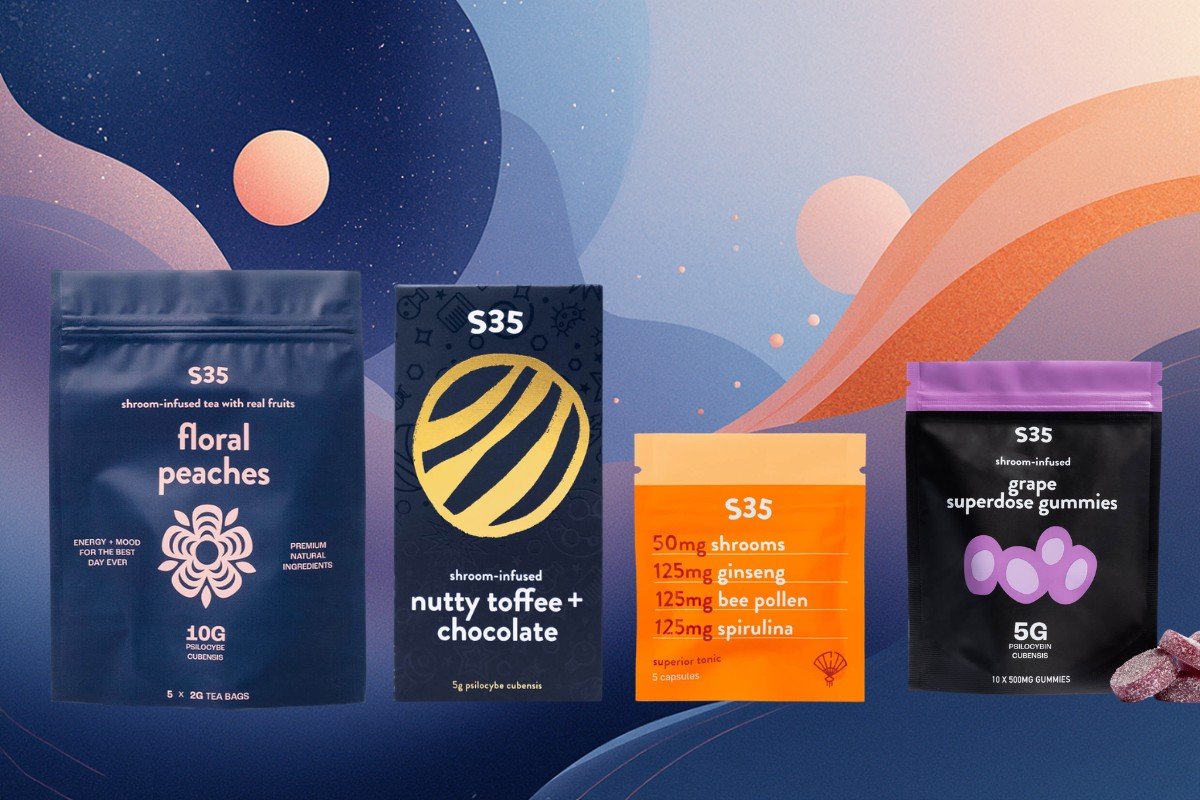
Best Mushrooms for Managing Anxiety (and How To Use Them)
There’s no direct research pointing to the benefits of mushrooms for reducing anxiety and depression.
However, certain mushrooms contain compounds that play a role in mood regulation. Also, empirical evidence is promising.
Here are some of the best mushroom strains for managing anxiety.
1. Golden Teacher Mushroom (Microdosing psilocybin)
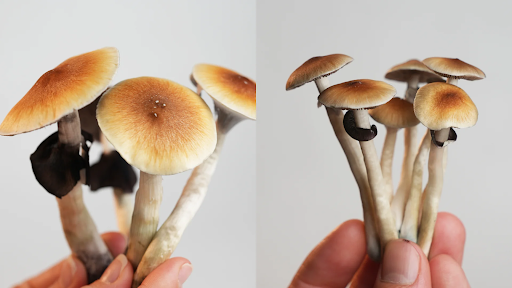
The Golden Teacher mushroom is part of the Psilocybe cubensis species of mushroom. It’s not a functional (think medicinal) mushroom. It contains Psilocybin, which causes mind-altering effects.
Several new studies have shown how Golden Teacher, when microdosed, can have positive lasting effects on mental health.
- Microdosing takes a fraction of a regular dose to prevent the hallucinogenic effects of the psilocybin while still getting its benefits.
HOW IT WORKS
Upon ingestion, your body changes it into a substance called psilocin.
This is the part that actually affects your brain. Psilocin mainly works by attaching to special brain cells called serotonin 2A receptors, which play a big role in mood and thinking.
We prepared a separate article explaining in depth the experience of the magic mushroom effects.
HOW TO USE GOLDEN TEACHER MUSHROOM FOR ANXIETY
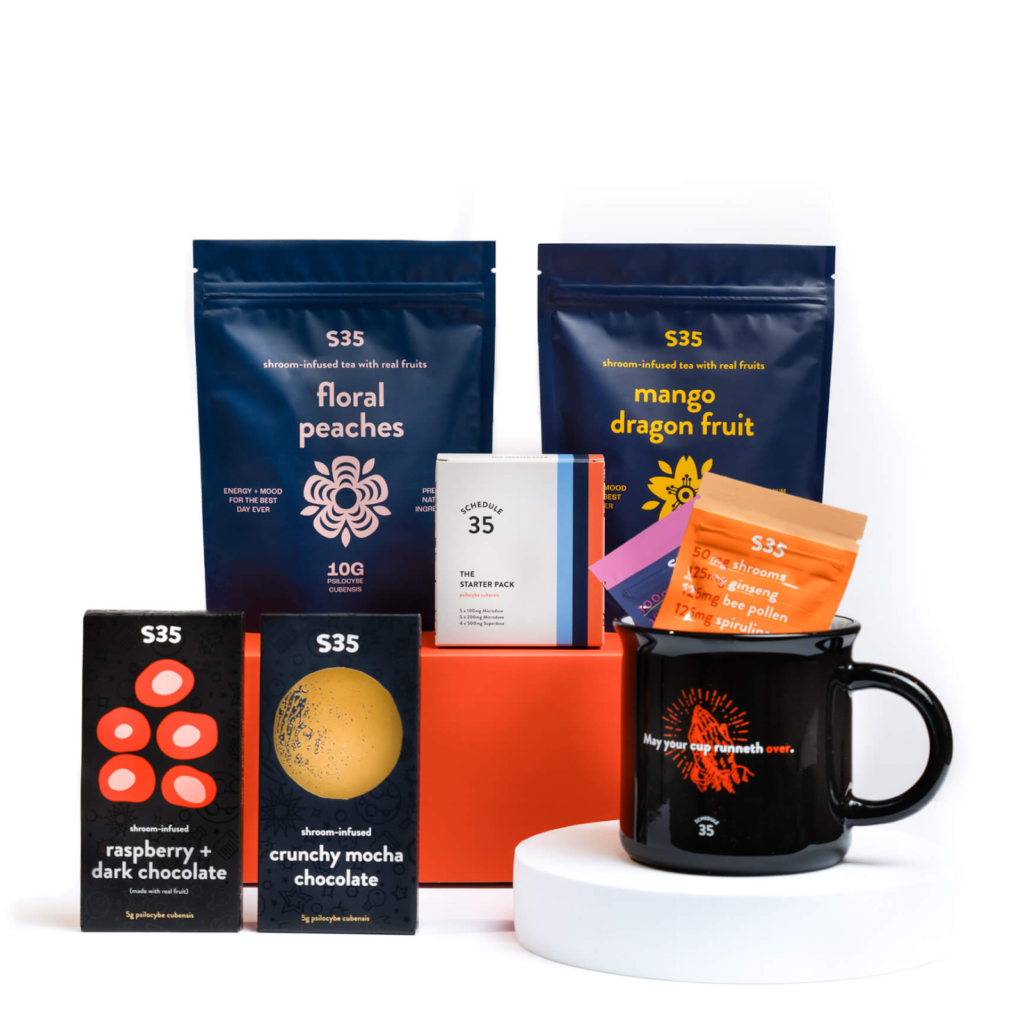
How quickly or effectively the Golden Teacher mushroom helps with anxiety depends on the form in which it is taken and the dosage.
While you can eat them raw (dried and powdered), it’s better to use edibles infused with high-quality golden teacher mushrooms.
At Schedule35, we stock a variety of shroom-infused products, such as:
We use precise dosage on each piece (or tea bag) and flavorful variants to mask the earthy taste of shrooms.
2. Reishi (Ganoderma Lucidum)
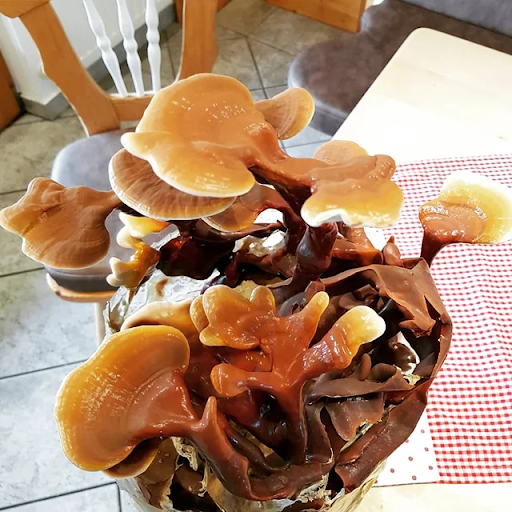
Many people call Reishi the mushroom of immortality, and it’s for good reasons.
This strain is a functional mushroom. It doesn’t cause any psychoactive effects. However, the fungi are known for their stress-reducing and calming effects.
HOW IT WORKS
In the Reishi mushroom, there are polypeptide compounds that act as precursors of neurotransmitters and endorphins.
These help provide an adequate response in stressful situations.
These polypeptides possess a peripheral anticholinergic and depressant effect on the central nervous system.
HOW TO USE REISHI MUSHROOMS FOR ANXIETY
There are Reishi mushroom extracts or green teas that contain a specific percentage of reishi mushrooms.
However, it’s pretty tricky to shop for edibles or teas with reishi mushroom, especially when the packaging label doesn’t specify.
3. Lion’s Mane (Hericium Erinaceus)
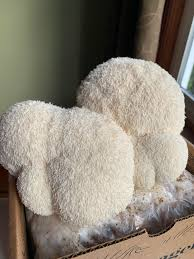
Lion’s mane is another popular functional mushroom strain that helps with anxiety by improving brain health.
Like psilocybin, lion’s mane also enhances the production of serotonin, a neurotransmitter that helps regulate mood, which could help alleviate anxiety symptoms.
HOW IT WORKS
When ingested in any form, Lion’s mane stimulates the production of nerve growth factor (NGF).
This can boost cognitive function and enhance mental clarity, two primary benefits that help manage anxiety.
HOW TO USE REISHI MUSHROOM FOR ANXIETY
Lion’s mane is an edible mushroom. You can cook it and serve it in dishes like risotto, pasta, or soup.
A better alternative is to use the powdered form of Lion’s Mane mushroom to prepare tea, coffee, or a smoothie.
4. Cordyceps (Cordyceps Sinensis)
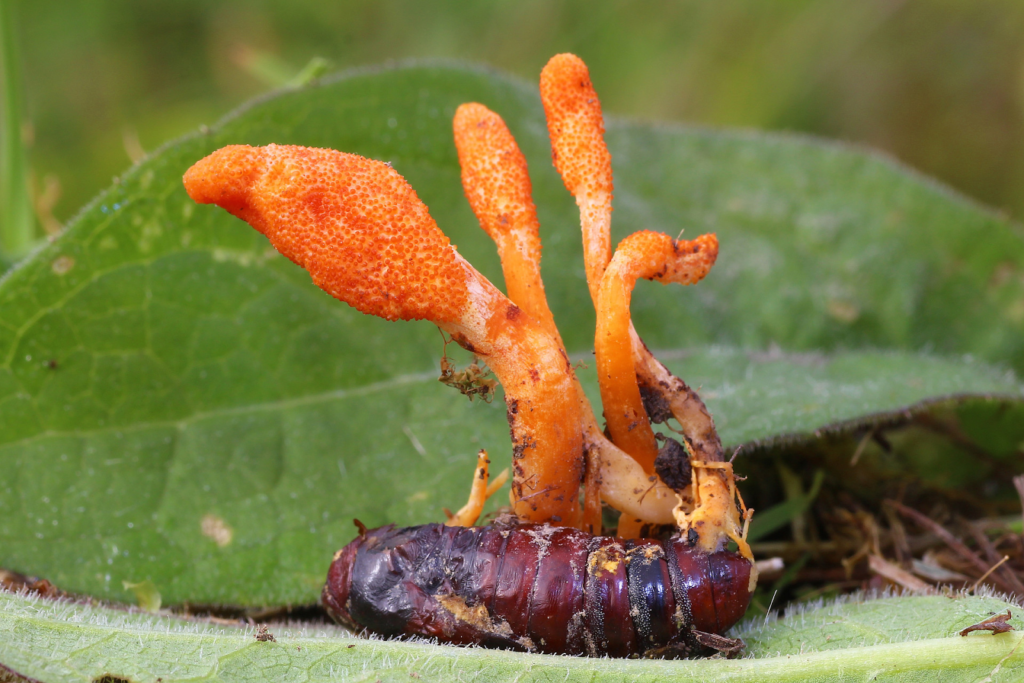
If you’re looking for a mushroom strain that will instead increase your resistance to fatigue, stress, and anxiety, consider Cordyceps functional mushrooms.
Cordyceps is a genus of parasitic fungi that grows on insect larvae, particularly in the high mountain regions of China.
The fungus is generally known for its anti-aging and performance benefits during exercise.
HOW IT WORKS
The fungus achieves that by stimulating the adrenal glands and modulating the nervous system.
Like other edible functional mushrooms, cordyceps have adaptogenic properties that contribute to their revitalizing and toning effects.
HOW TO USE CORDYCEPS MUSHROOM FOR ANXIETY
There are antidepressant-like water extracts of Cordyceps and capsules made with Cordyceps powder.
However, note that most cordyceps supplements are made in a lab rather than found in nature.
Even though people often call cordyceps a mushroom, the lab-grown kind doesn’t grow a mushroom part.
Getting Started with Mushrooms for Anxiety
When you start your anxiety management journey using mushrooms, one of the most important things to consider is dosing, consistency, tracking results, and adjusting.
Recommended Starting Approach
For a psilocybin mushroom like Golden Teacher, it’s best to start small. A microdose is typically 50mg to 200mg of dried psilocybin mushrooms.
Our Superior Tonic shroom-infused capsules contain 50mg of psilocybin in each, helping you nail your microdose.
We also provide a dosing guide that helps you determine your daily and weekly consumption.
Building a Consistent Routine
Consistency is key when using mushrooms for mental wellness. You can choose a set time daily (e.g., every morning before breakfast).
Since there are other factors to consider before choosing when to take mushrooms, we created a seperate guide on what time of the day to microdose.
Also consider combining the practice with mindful activities such as journaling, deep breathing, walking, or yoga.
Tracking Results and Adjusting as Needed
When you start taking magic mushrooms under the proper dosage to manage stress and anxiety, you can track the following symptoms so you know when to adjust your dosing to a lower dose or up the ante:
- Mood before and after taking
- Physical sensations
- Thoughts or emotional patterns
- Sleep quality
- Social ease or nervousness
dosage ofThe easiest way to track these areas is to use a simple journal and write brief notes on how you feel, either daily or weekly.
QUICK TIP:
After 2–3 weeks, look for patterns. Are you less reactive? Sleeping better? Less anxious in social settings?
Final Thoughts
As the health benefits of mushrooms become more popular, conversations around managing anxiety and mental fatigue are shifting towards unconventional treatments.
Several studies have pointed to how psilocybin mushrooms address the symptoms of anxiety.
With the correct dosing on a high-quality shroom product, you can expect more noticeable ease in anxiety or better mental clarity.
You can even expect increased emotional resilience, reduced negative self-talk, and a better outlook.
Meanwhile, the effect is supposed to be subtle, not full-on trips.
If you’re feeling significantly altered, you’re likely taking too much.