
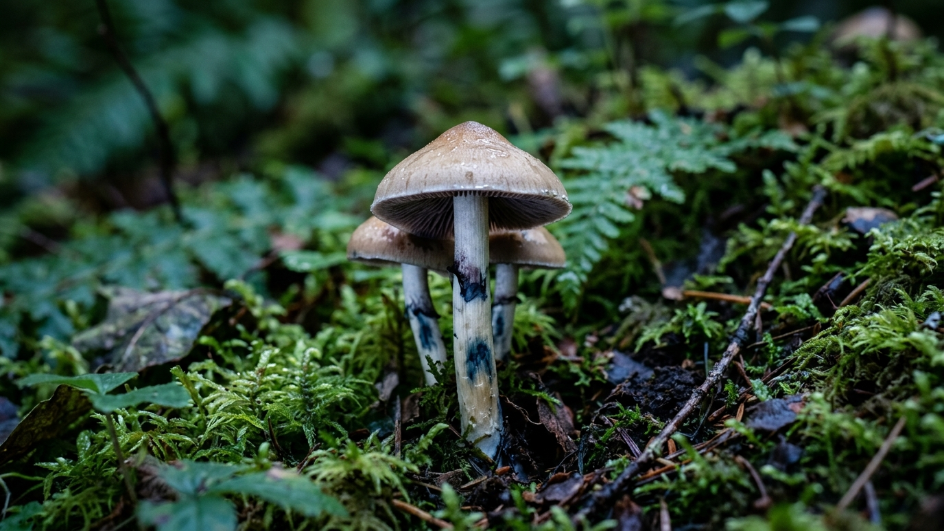
You’ve probably heard names like Psilocybe cubensis or Psilocybe semilanceata tossed around in shroom circles, but what do they actually mean?
The scientific names of various shroom strains are not just for scientists.
They help you know what kind of experience to expect, where the mushroom comes from, and how to tell one species from another, and know where your yummy shroom chocolate or gummies come from.
In the sections that follow, you will learn the correct scientific names of various mushroom species. As a bonus, we share tips for spotting these various species.
Shrooms with Benefits
The next dimension in mind-body growth. Explore our thoughtfully crafted range; from Gummies and Capsules to Teas and Chocolates, designed to elevate clarity, creativity, and balance.
Shop Now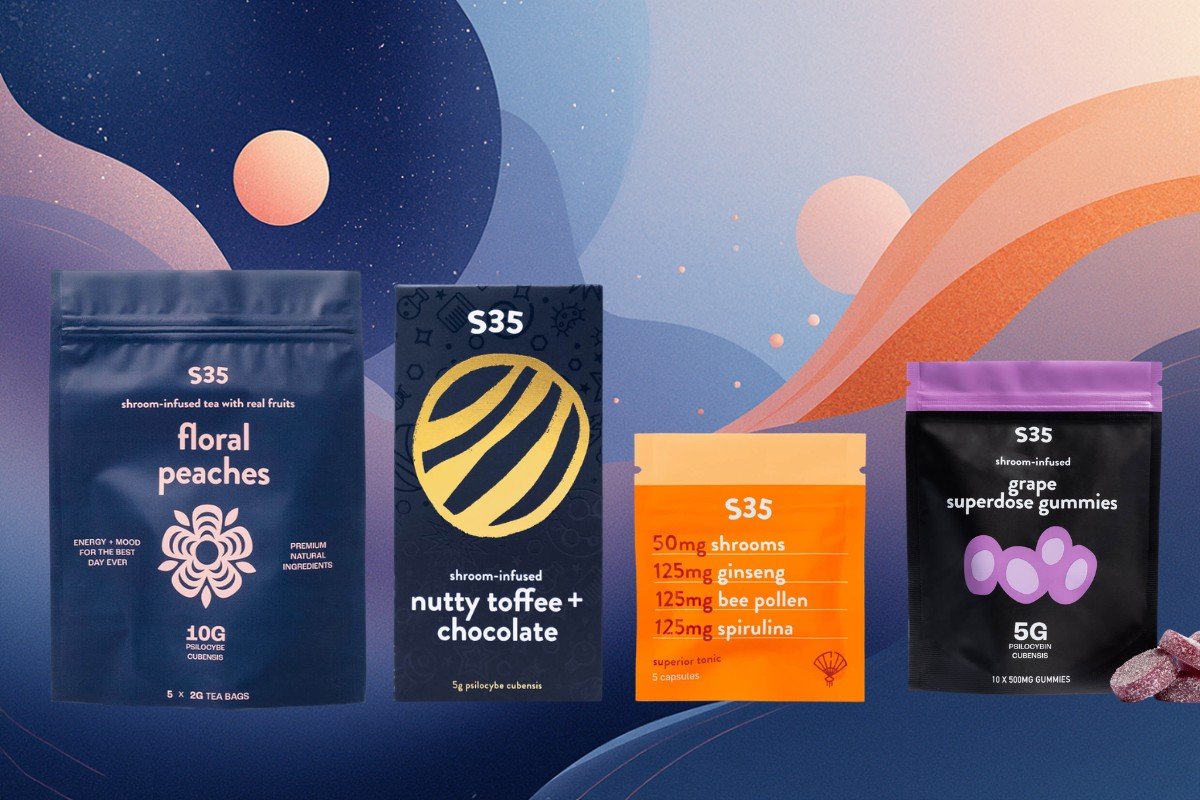
Popular Mushroom Species and Their Scientific Name
The focus of this guide is on magic mushrooms. Research has shown that there are over 100 psychoactive mushroom species worldwide. Let’s look into the scientific names of the popular ones:
| MUSHROOM SPECIES | SCIENTIFIC NAME | ABOUT |
| Golden Teacher | Psilocybe cubensis | Known for its spiritual effects and beginner-friendly potency. |
| Penis Envy | Psilocybe cubensis (variant) | Stronger than average, with a thick stem and intense visuals. |
| Blue Meanie | Panaeolus cyanescens | Very potent; produces intense visuals and deep philosophical trips. |
| Liberty Cap | Psilocybe semilanceata | One of the most widespread wild psilocybin species; highly potent. |
| Wavy Cap | Psilocybe cyanescens | Gets its name from its wavy cap; powerful with strong visual effects. |
| Albino Penis Envy | Psilocybe cubensis (variant) | A mix of Penis Envy and Albino A+; very strong and rare. |
| Flying Saucer Mushroom | Psilocybe azurescens | Extremely potent; named for its saucer-like shape. Not for beginners. |
| Mexican | Psilocybe mexicana | The species that inspired Albert Hofmann’s psilocybin discovery. |
| Natal Super Strength | Psilocybe natalensis | Native to South Africa, strong and unique genetic cousin to cubensis. |
The Psilocybe cubensis is the most significant strain because it encompasses many cultivar types.
While Golden Teacher is the most common one, other magic mushroom cultivars, such as B+, Ecuadorian, Albino A+, Mazatapec, Thai, Colombian, Huautla, and even Chitwan Nepal, are all variants of the same strain: Psilocybe cubensis.
How Mycologists Classify Mushrooms
Mycologists use a hierarchical system to classify mushrooms based on their biological characteristics. This system is based on the Linnaean system of taxonomy.
Linnaean system
Let’s use the Psilocybe cubensis strain, for example:
| Taxonomic Rank | Psilocybe cubensis |
| Kingdom | Fungi |
| Division (Phylum) | Basidiomycota |
| Class | Agaricomycetes |
| Order | Agaricales |
| Family | Hymenogastraceae |
| Genus | Psilocybe |
| Species | Psilocybe cubensis |
So, when we say Psilocybe cubensis, Psilocybe is the genus, and cubensis is the species. Together, they form the full scientific name.
Cultivar Features
Since each species can have variants of cultivars under it, the categorization is usually based on each cultivar’s features, such as:
- Spore color
- Gill structure
- Cap and stem appearance
- Genetic analysis (DNA sequencing)
These features allow you to distinguish mushrooms that may look similar but are actually unrelated (or identify strains that belong to the same species but grow in different parts of the world).
Difference Between Mushroom Common Names and Scientific Names
At Schedule35, we prioritize including the scientific name of the strain we use in our mushroom edibles because it’s easier to understand the potency of our product based on biology and genetics.
On the other hand, the distinction that common names bring is often based only on look or lore.
USING SCIENTIFIC NAMES OF MUSHROOMS
When you tell someone about a mushroom strain using its scientific name, it’s easier because:
- Universal Latin name
- Consistent worldwide
- Unique to one species
USING COMMON NAMES OF MUSHROOMS
- Varies by culture or region
- May apply to multiple species
Meanwhile, using common names makes pronunciation and nomenclature easier. However, it comes with ambiguity. Imagine calling Golden Teacher and Penis Envy the term “mushies.”
While it’s not wrong, it can be misleading.
DID YOU KNOW?
- Shroom strains can help you determine the ideal form to consume for the best experience. But, for the far extremes, such as “Can you smoke magic mushrooms?” the answer is a clear-cut “Better not to.”
How Do You Remember Shroom Scientific Names?
If you observe the pattern in which scientific names of mushrooms are written, it’s usually in two parts: the genus name and the species epithet.
It’s similar to how we have first names and last names.
Let’s take the Golden Teacher strain, for example, with the scientific name Psilocybe cubensis.
- The first part of the name is the genus name, Psilocybe. It is always capitalized. It denotes the broader group (psilocybin mushrooms) to which the species belongs.
- The second part of the name is the species epithet (cubensis). It identifies the specific species within the genus.
Using Mushroom Scientific Names to Assess Product Quality
When buying any mushroom-infused product (usually edibles), one of the key pieces of information on the product label you want to pay attention to is the mushroom species used.
Apart from getting clues on what effects to expect (e.g., the best shroom strain for relaxation), it also gives clues on potency.
Species like Psilocybe cubensis are commonly used in edibles, capsules, and microdoses because they are moderately potent and have predictable effects.
At Schedule35, we stock a wide range of edibles infused with Golden Teacher magic mushrooms (Psilocybe cubensis). These include:
We also help you know exactly how many mg of psilocybin (or grams of mushrooms) you’re taking per serving. Each piece of our gummies, chocolate bars, capsules, and tea bags is precisely dosed.
Red Flags in Product Descriptions and Labeling
Look out for the red flags when shopping for mushroom products with respect to the name and other details provided on the labeling:
- If the label of the shroom edible only says “magic mushrooms” or “shrooms” without clarifying the species, that’s a red flag.
- Be cautious of products claiming to be “10x stronger than anything else” without showing lab tests or specifying the species. When the species is stated, you can confirm if it’s a super potent magic mushroom.
- Vague terms like “high dose” or “light trip” don’t mean the same thing for everyone.
It’s a plus for transparency if the label provides details about the product’s origin or grow method.
At Schedule35, we cultivate our mushrooms using 100% organic coconut coir to guarantee the highest-quality product while minimizing the ‘upset stomach’ often associated with mushrooms grown in manure.
Finally, Building Your Mycological Knowledge
Knowing your mushroom means knowing your trip.
If you want to expand your knowledge on mycology and various mushroom strains, even beyond the psychoactive cultivars, then there are books you can read.
In a seperate article, we reviewed the best books about mushrooms worth your time, starting from the popular Michael Pollan’s How to Change Your Mind and Mark Vorderbruggen’s Foraging.