
Magic mushrooms, also called shrooms, come in many species and strains. If you’re new to psilocybin mushrooms, it might be hard to tell one type from another.
In this guide, we’ll explain the common physical traits of popular magic mushrooms, their texture, where they’re found, and simple tips to help you identify them more easily.
How to Recognize Magic Mushrooms
Shrooms with Benefits
The next dimension in mind-body growth. Explore our thoughtfully crafted range; from Gummies and Capsules to Teas and Chocolates, designed to elevate clarity, creativity, and balance.
Shop Now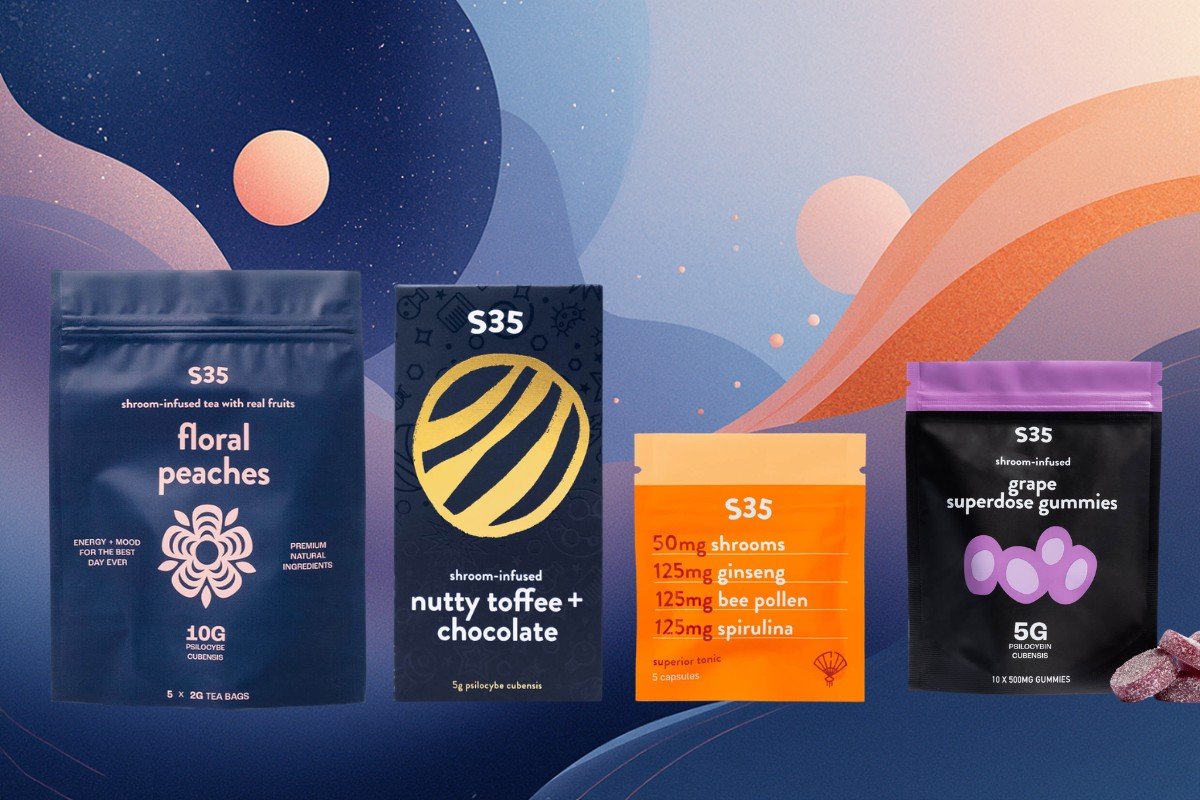
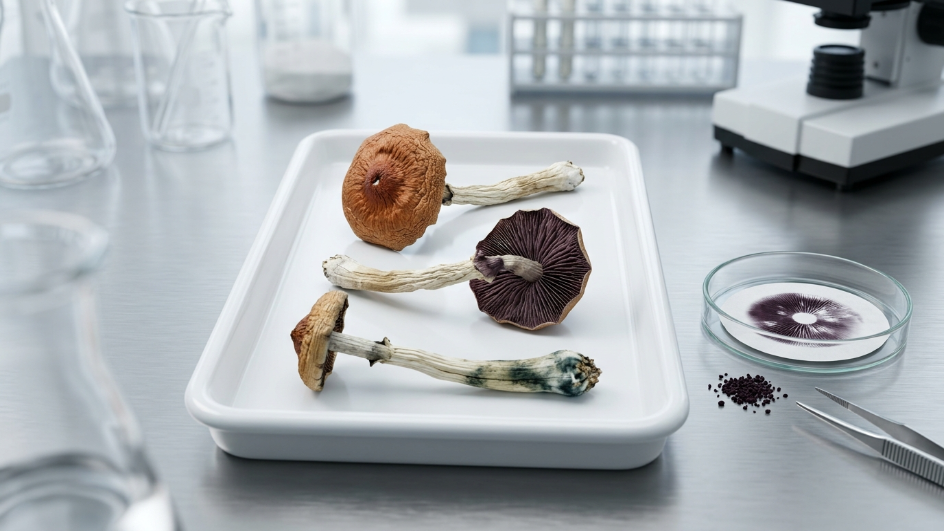
Magic mushrooms are usually found fresh or dried. They have long, thin stems and caps with dark ridges underneath.
When fresh, their stems are white or pale gray, and their caps are darker brown around the edges but lighter brown or white in the center. On the other hand, dried mushrooms are mostly rusty brown with some patches of off-white.
This knowledge is essential, especially if you’re an interested mycologist or buying raw magic mushrooms.
Even pre-packaged shroom products usually include labels with the specific type of mushroom used, so understanding the differences between strains can help you make the right choice.
Physical Features of Magic Mushrooms Explained
The most important thing is to know the basic physical features since many non-psychoactive or toxic mushrooms can closely resemble psilocybin species.
1. Cap (Pileus)
The cap is the uppermost part of the mushroom. It protects the gills underneath, where spores are produced. The cap’s shape, size, texture, and color can vary depending on the species.
The cap is initially rounded for Psilocybe cubensis (Gold Caps), resembling a dome. It becomes flatter as the mushroom matures.
It has a golden-brown color that lightens toward the edges and often feels smooth or slightly sticky in moist conditions. This gives the mushroom its iconic “golden top” appearance.
Strains like Wavy Cap typically have a caramel-colored cap that develops a rippled edge as they mature, whereas the cap of the Liberty Cap species is small, conical, and sharply pointed.
2. Gills (Lamellae)
Gills are located on the underside of the cap and are needed to produce and release spores. Depending on the species, they vary in spacing, color, and maturity stages.
On a Psilocybe cubensis mushroom, these gills start light gray and darken to purple-brown as the mushroom matures and produces spores.
The gills are closely packed and contribute to the mushroom’s reproductive process.
The gills eventually turn purplish-brown on species like the Psilocybe semilanceata as spores mature.
3. Stipe (Stem)
The stipe is the vertical structure supporting the cap.
The stem is relatively thick and robust for magic mushrooms, often swelling slightly at the base.
It is white to off-white and frequently bruises blue when touched or damaged. This reaction is due to the presence of psilocin (the psychedelic compound in shrooms responsible for the mind-altering effects).
The stem of the Psilocybe cyanescens species (Wavy Caps) is slender and more delicate than that of Psilocybe cubensis. It is cream-colored and tends to bruise blue more prominently near its base or where handled.
The case differs slightly for Psilocybe semilanceata, which has a thin, wiry stem that often curves somewhat.
Its yellowish-brown color matches the cap, though it may be paler near the base.
4. Spores
Spores are microscopic reproductive cells released by the gills to propagate the species.
Most magic mushrooms’ spores are ellipsoid (oval-shaped) and dark purple-brown.
5. Blue Bruising
Blue bruising is a hallmark feature of magic mushrooms. It is caused by the oxidation of psilocin when the mushroom is damaged or handled.
When mushrooms bruise blue, it’s one of the primary—but far from the only—signs that it’s indeed psychedelic. The coloration changes in mushrooms with psilocybin and psilocin (PsiP & PsiL).
Exposure to oxygen and handling are the leading causes of blue bruising in mushrooms, which triggers psilocin degradation in the mushrooms.
You can still consume magic mushrooms that bruise blue, but look out for black spots, which suggest mold growth. In that case, it’s not safe.
6. Veil and Annulus
Some psilocybin mushrooms have a partial veil covering the gills during their development.
As the cap expands, the veil tears, leaving a ring-like structure on the stem called an annulus.
For Psilocybe cubensis species, the veil is prominent and leaves a noticeable annulus around the stem, which darkens as spores are deposited.
You can use this feature as an indicator when trying to distinguish young mushrooms from older ones.
Size of Shrooms
Magic mushrooms are tiny, usually growing no taller than 3 inches—about the height of three small paper clips stacked together.
Some magic mushrooms have wavy caps, while others have flatter, straighter caps.
Common Shroom Types and How to Recognize Them (With Pictures)
This list is by no means exhaustive. However, here are the common magic mushroom species and what they look like:
Psilocybe cubensis (Gold Caps)
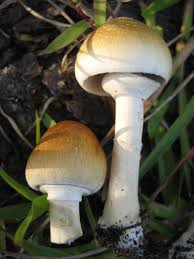
Psilocybe cubensis (Gold Caps)
- It is found in tropical to temperate climates across all continents except Antarctica.
- They are recognized by their caramel-colored caps, which turn golden as they mature.
- Caps can grow up to 3 inches wide, and stems can grow up to 6 inches tall.
- Often found growing on dung and bruises, blue when handled.
Psilocybe semilanceata (Liberty Caps)
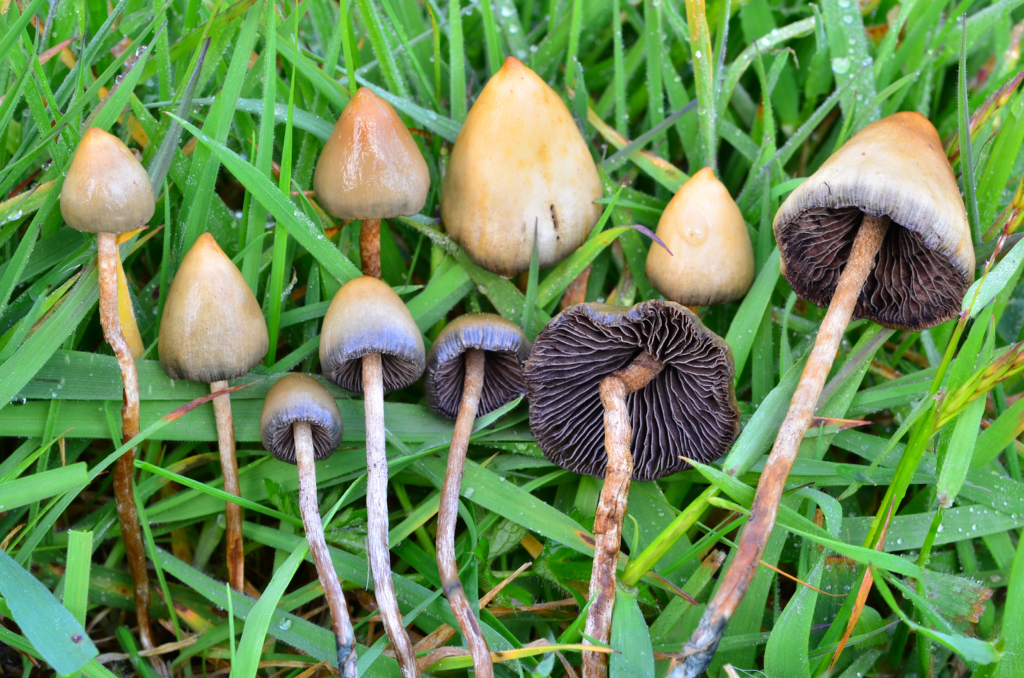
- Small mushrooms with bell-shaped caps less than 1 inch wide and thin stems up to 4 inches tall.
- Fresh caps are sticky and brown with grooves and fade to tan when dry.
- Spore prints are dark purplish-brown.
- The stem may develop a bluish tint at the base.
Psilocybe cyanescens (Wavy Cap)
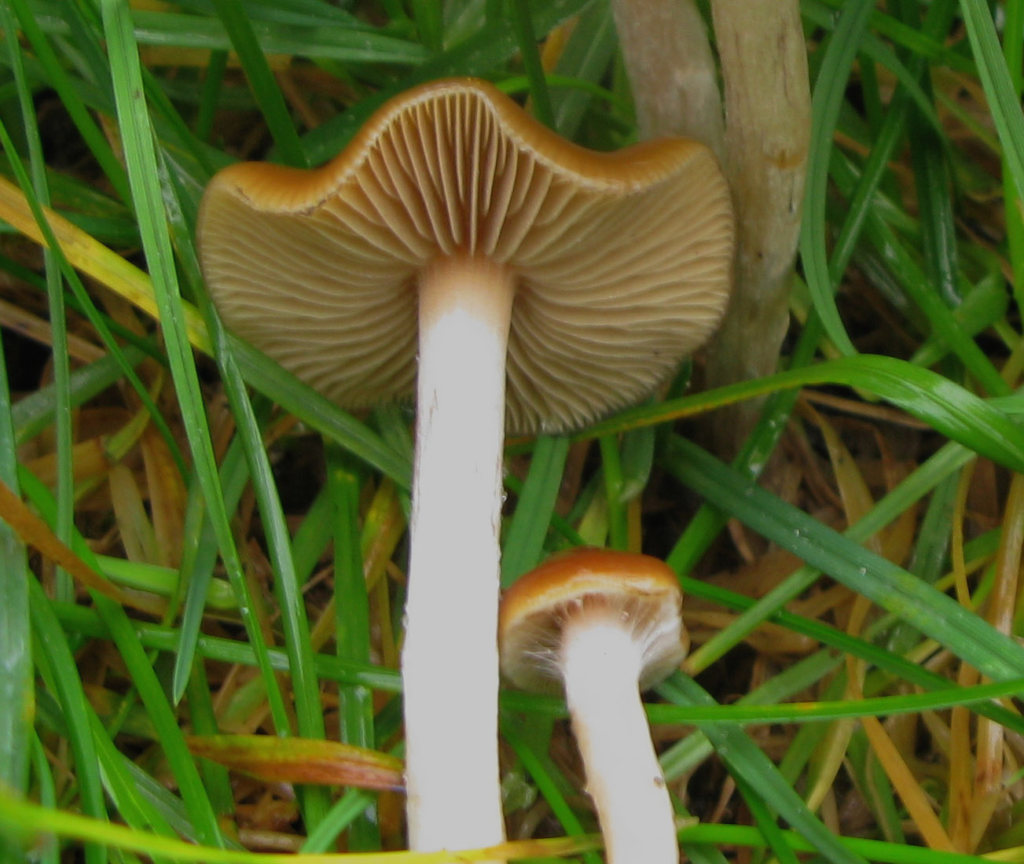
- Grows in wooded areas of the UK and North America.
- The copper-colored cap fades to yellow on the edges, sitting on a white stem.
- The unique wavy cap lacks the pointed tip seen in other psilocybin mushrooms.
- Cap resembles a relaxed, protective blanket when matured.
Psilocybe mexicana
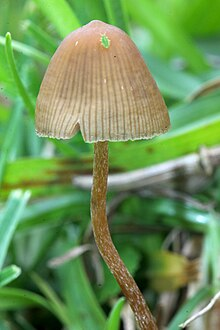
- Similar to Liberty Caps, which have conical, moist caps and faint ridges.
- Produces psychedelic sclerotia (truffle-like structures) underground.
- Sclerotia range from pale yellow to brown, sometimes with a bluish tint.
Psilocybe tampanensis (Philosopher’s Stone)
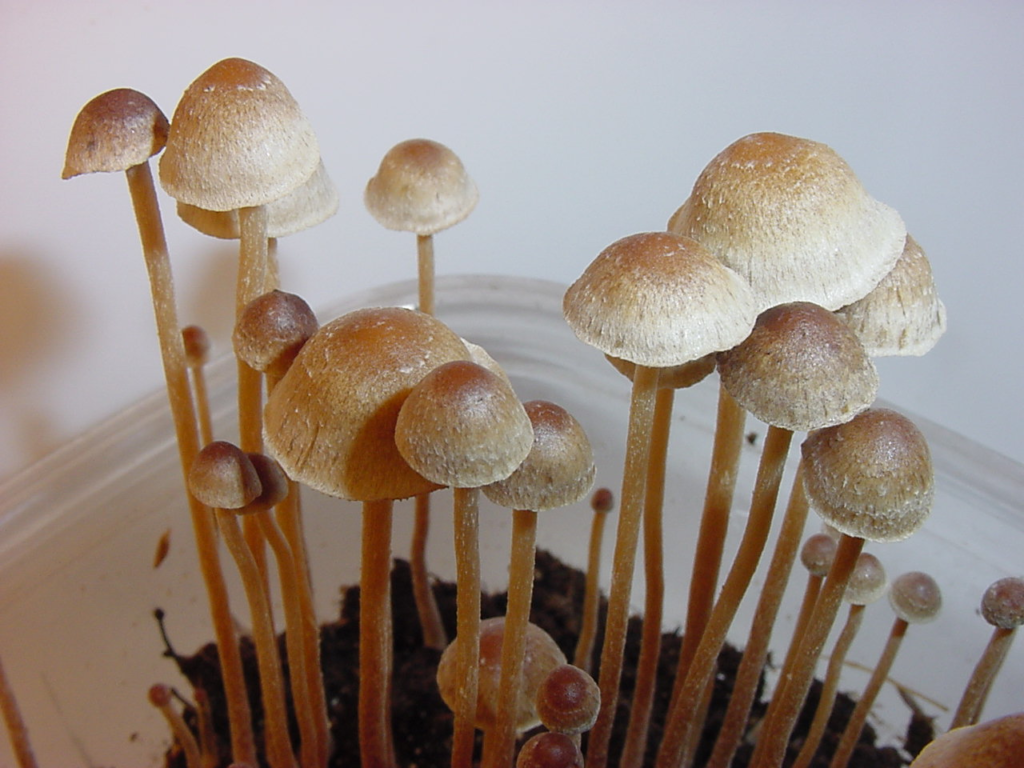
- Rare mushrooms were found initially in Florida and are now cultivated for magic truffles.
- Convex light brown cap that fades to straw as it ages, with a small bump in the center.
- Produces dark purple-brown spores and yellow-brown sclerotia.
How to Identify Shrooms That Have Gone Bad
Psilocybin mushrooms that have gone bad look different. Spotting bad mushrooms is usually a no-brainer. Look for glaring signs, such as funky colors and weird textures.
Depending on the type, fresh mushrooms usually have a uniform color, whether white, brown, or another hue. When mushrooms spoil, they can darken or have discolored spots.
As mushrooms degrade, mucus-like substances begin to appear and break down the mushrooms’ tissues. They feel excessively slippery or slimy when you touch them.
Mold can appear as fuzzy patches or spots on the surface of mushrooms. It is usually white or green but can also appear blue or black, depending on the type of mold.
Of course, another telltale sign of spoiled mushrooms is their awful smell—like ammonia or rotten food. Fresh mushrooms have a mild, earthy aroma.
QUICK TIP:
- To keep your shrooms fresh and safe, keep them dry until you’re ready to chow down. Dry them in the sun until they are no longer moist, then store them in a mason jar.
Street Names for Magic Mushrooms
Now that you know the physical features of magic mushrooms, you may still be confused when these species are called by a different name, even after identifying them by their appearance.
There are many street names for magic mushrooms. The common ones include:
- Shrooms
- Little smoke
- Boomers
- Flower flipping
- God’s flesh
- Hippieflip
- Hombrecitos
- Las mujercitas
Finally, Remember…
Most magic mushrooms look like ordinary small brown mushrooms, making it easy to mistake them for poisonous ones, some of which can be deadly.
Never consume a mushroom unless you’re entirely sure what it is.
It’s safest to go mushroom hunting with someone experienced rather than relying only on pictures or descriptions.
Buying ready-made products from a trusted shroom store is safer and easier if you want magic mushrooms to make gummies, capsules, or teas.
For example, Schedule35 offers the best shroom-infused capsules for microdosers. Available in 100, 200, and 500mg doses, just pick what suits you best.
You can even deliver them straight to your door anywhere in the U.S. or Canada.